
Introduction
SEO and marketing services combine search engine optimization with broader digital marketing strategies to increase online visibility, attract qualified website traffic, and convert visitors into revenue. In practical terms, these services help a business appear where buyers are already searching, then use channels such as PPC, social media marketing, email, and content marketing to keep those buyers engaged across the full customer journey.
This guide covers full-service digital marketing agencies, specialized SEO providers, and hybrid service models that combine internal strategy with external execution. It does not focus on DIY SEO tools, basic web development, or one-time website design unless those activities directly support search engine optimization services or digital marketing performance. The guide is written for business owners, marketing managers, and executives who need professional support from an SEO agency, SEO company, or digital marketing agency to compete in Google Search, other search engines, and newer AI-driven discovery channels.
SEO and marketing services typically include keyword research, on-page SEO, technical SEO, content optimization, link building, PPC advertising, social media, email campaigns, conversion optimization, and analytics reporting. SEO services focus strictly on driving organic traffic from search engines, while marketing services encompass the broader strategy of promoting a business across all digital and traditional channels.
Key outcomes include:
- Improved search engine rankings and keyword rankings for high-value queries
- Increased organic traffic and qualified traffic from search engine results pages
- Higher conversion rates from SEO, PPC, email, and social channels
- Better brand visibility, search visibility, and trust with target audiences
- Measurable ROI from digital marketing services, including leads, sales, and revenue growth
Understanding SEO and Marketing Services
SEO services encompass a range of strategies and techniques used to enhance a website’s visibility and ranking on search engines, aiming to improve organic search results and attract potential customers. SEO specifically focuses on optimizing websites to rank higher in organic search results to drive inbound traffic, and SEO focuses on optimizing websites to rank higher in organic search engine results.
Marketing services are broader promotional activities that use multiple channels-such as social media, email, PPC advertising, brand development, and content distribution-to engage customers across the entire buying journey. SEO is a specialized subset of the larger marketing umbrella: SEO targets search engine results pages, while marketing covers social media, email, ads, and branding. SEO relies entirely on user search intent, whereas marketing actively pushes messages to targeted audiences.
SEO aims for search visibility and organic clicks, while marketing aims for overall brand growth and sales. Integrated SEO and digital marketing services are specialized strategies designed to increase a company’s online visibility and generate leads. Together, SEO and marketing services build online visibility, attract targeted traffic, and convert visitors into paying customers.
Core SEO Service Components
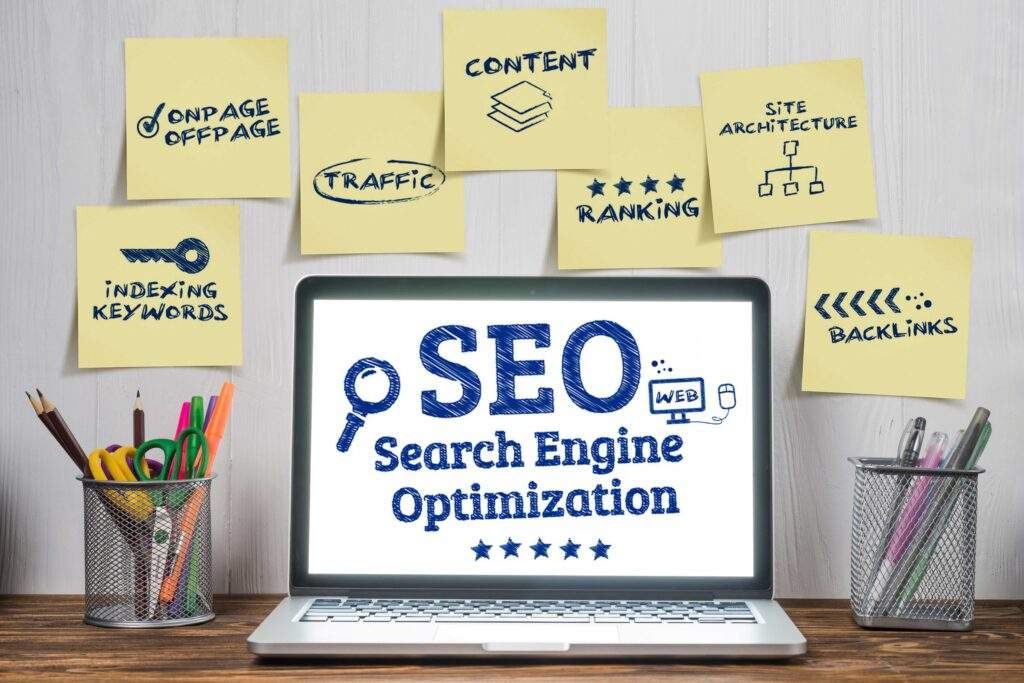
Core SEO service components include technical SEO audits, keyword research, on-page optimization, content optimization, off-page SEO, and link building. On-Page SEO optimizes individual website pages, focusing on content, HTML tags, and keyword placement. On-Page SEO also focuses on content creation, keyword integration, and optimizing page elements like titles and meta descriptions.
Technical SEO involves optimizing a website’s technical aspects to improve its visibility and ranking in search engine results, including factors like site speed, mobile-friendliness, and structured data. Technical SEO improves website backend structure, enhancing indexing, site speed, and mobile-friendliness. Technical SEO also ensures the backend of websites is optimized for search engine crawlers, improving page loading speeds and mobile responsiveness.
A comprehensive technical SEO audit typically includes evaluating XML sitemaps, indexing issues, site speed, and mobile usability to ensure that search engines can effectively crawl and index a website. Implementing best practices for technical SEO can lead to improved site performance, which is crucial as 53% of mobile users abandon sites that take longer than 3 seconds to load, and broader website optimization for speed, usability, and conversions can further enhance results.
Effective content optimization involves enhancing website content to align with targeted keywords and improve search engine visibility, which can lead to increased organic traffic and conversions. Content optimization strategies should include comprehensive on-page SEO with keyword research and competitive analysis to identify high-performing keywords that can drive traffic and improve rankings. Regularly updating and enriching existing content is crucial for maintaining and improving search rankings, as it helps to align with evolving user intent and search engine algorithms.
Off-Page SEO builds authority outside a website, focusing on earning high-quality backlinks and social signals. Off-Page SEO builds a website’s credibility and authority across the web by acquiring high-quality backlinks. Backlinking strategies and digital PR are designed to build a brand’s authority and enhance online visibility through quality links from reputable sites. Business websites receive significant search engine ranking boosts from other reputable websites linking to theirs, making backlinks a crucial component of SEO. A strong backlink profile is essential for improving a website’s authority, which in turn can lead to higher search engine rankings and increased organic traffic.
Effective SEO strategies start with assessing the current strengths, weaknesses, and key issues of a brand and website, often beginning with a quick analysis of a website in key areas like indexation and backlinks. From there, an SEO services team can build a tailored SEO strategy that improves search engine performance over time, much like a professional SEO company focused on content, digital PR, and technical SEO would structure its campaigns.
Integrated Marketing Service Elements
Integrated marketing service elements extend SEO efforts into PPC advertising, social media marketing, content creation, email campaigns, and conversion optimization. Search Engine Marketing (SEM / PPC) includes paid advertising where businesses bid on keywords to display instant ads at the top of search results. Pay-Per-Click (PPC) places paid advertisements on search engines and social platforms, yielding immediate traffic.
Leveraging SEO data can enhance paid campaigns by identifying high-converting organic keywords for PPC. For example, a digital marketing agency specializing in search engine marketing may use Google Search Console, Google Analytics, and SEO tools to find organic queries that already convert, then expand those terms into Google Ads campaigns.
Social Media Marketing fosters direct audience engagement through managing profiles on platforms like Instagram and LinkedIn. Content Marketing revolves around creating and distributing valuable content to attract and retain a defined audience. Content Marketing also creates valuable articles, videos, and infographics to build brand authority and long-term trust.
Email Marketing sends targeted newsletters, promotional offers, and automated messages to nurture leads and build customer loyalty. Email Marketing also sends targeted campaigns to subscriber lists to nurture leads and drive repeat sales. Using digital marketing software and heatmaps can optimize the user experience on top-ranking SEO landing pages, helping teams turn organic search traffic into leads and purchases.
SEO takes months to show sustainable results, whereas marketing channels like paid ads can generate leads instantly. SEO requires upfront investment for long-term free traffic, while marketing often requires ongoing ad spend. Effective SEO creates a steady stream of free, organic traffic from users actively searching for products or services. Marketing services expand reach across various digital channels to drive immediate action or engagement.
Integrating SEO and marketing creates a powerful synergy where SEO provides a steady stream of high-intent, organic traffic. Organic search is the dominant acquisition channel, driving 53.3% of all website traffic, which is more than paid and social channels combined. SEO remains the dominant acquisition channel, driving 53.3% of all website traffic, far exceeding paid and social channels combined, making it a sustainable source of new visitors.
SEO leads have a 14.6% close rate, compared to just 1.7% for outbound leads like cold outreach or print advertising, indicating that SEO traffic is significantly more likely to convert into paying customers. SEO generates an average return on investment of 748%, meaning businesses earn approximately $7.48 for every $1 spent on SEO. Businesses generate an average 748% return on investment from SEO, meaning roughly $7.48 earned for every $1 spent, highlighting its effectiveness as a long-term marketing strategy. Businesses generate an average of 748% return on investment from SEO, meaning roughly $7.48 earned for every $1 spent, making it one of the highest-ROI digital marketing strategies over time.
Measurable results from SEO and marketing can be tracked and analyzed for data-driven improvements. Outranking competitors in search engines builds consumer trust and positions a company as an industry leader. This foundation leads directly into the service package question: which mix of SEO marketing services fits the business model, market size, and growth target?
Types of SEO and Marketing Service Packages
Once the core components are clear, the next step is choosing a service package that matches your market, budget, and business goals. A local service business, a national B2B company, and an online retailer all need search engine optimization and digital marketing, but each requires different deliverables, timelines, and measurement models.
In 2026, the global digital marketing services market is expected to reach approximately US$750 billion and grow to about US$1.3 trillion by 2033 at roughly an 8% CAGR. That growth reflects a wider shift from simple website SEO services toward full service digital marketing, AI SEO, generative engine optimization, and integrated digital marketing solutions.
Local SEO and Marketing Services
Local SEO targets geographically relevant searches and optimizes Google Business Profiles for regional discovery. Local SEO optimizes web presence for localized search results and Google Maps. Local SEO is essential for businesses aiming to attract customers in their immediate geographic area, as it enhances visibility in local search results.
A local SEO package usually includes Google My Business optimization, now commonly handled through Google Business Profiles, local keyword targeting, NAP consistency, citation management, review support, and location-based PPC campaigns. Effective local SEO strategies include optimizing Google Business Profiles, utilizing local keywords, and managing online directory listings to improve local search visibility.
Geotargeted campaigns in local SEO can utilize methods such as proximity radius, IP targeting, and geofencing to reach potential customers effectively, especially when supported by comprehensive local SEO services for small businesses that also address listings, reviews, and on-page optimization. For a law firm, dental clinic, HVAC contractor, or restaurant, these local SEO strategies—including local content marketing tailored to community search intent—help convert nearby searchers into phone calls, map visits, form submissions, and in-person customers.
Typical local SEO and marketing services often cost about US$500–US$2,000 per month, depending on competition, location count, and service scope. A free SEO audit can be useful as an initial screening tool, but serious local growth usually requires ongoing SEO services, content updates, technical audits, and conversion tracking.
Enterprise SEO and Marketing Solutions
Enterprise SEO and marketing solutions are designed for national brands, multi-location companies, large publishers, SaaS companies, and international organizations. These programs involve large-scale keyword strategies, complex technical SEO, multi-location optimization, advanced analytics, stakeholder reporting, and integrated marketing campaigns.
An enterprise SEO campaign may include site architecture improvements, JavaScript rendering analysis, structured data, international SEO, multilingual content, Core Web Vitals work, advanced internal linking, digital PR, and executive dashboards. Because enterprise websites often contain thousands or millions of URLs, the SEO team must prioritize indexation, crawl budget, page templates, content quality, and scalable on page SEO improvements.
Enterprise marketing programs also integrate paid media, social media marketing, content marketing, email nurture sequences, and conversion rate optimization. A search engine optimization agency or search engine optimization company working at this level should connect search engine rankings to revenue, pipeline, customer acquisition cost, and lifetime value.
Typical enterprise SEO and marketing retainers can range from US$10,000 to US$50,000+ per month, especially in competitive industries. A digital marketing agency specializing in enterprise SEO should provide tailored solutions, senior SEO specialists, clear reporting, and governance processes that align SEO efforts with business goals.
E-commerce SEO and Marketing Packages
E-commerce SEO, also called ecommerce SEO, focuses on improving product, category, and collection pages so online retailers can win organic search traffic and revenue. These packages usually include product page optimization, shopping campaign management, feed optimization, marketplace integration, technical SEO for faceted navigation, and conversion rate optimization.
For e-commerce brands, page SEO includes optimized product titles, unique descriptions, schema markup, internal links, user-generated content, and persuasive meta descriptions, supported by ecommerce link building strategies to earn high-quality backlinks. Technical SEO is especially important because filters, duplicate URLs, image-heavy pages, and slow load times can reduce crawl efficiency and harm search rankings.
E-commerce marketing services often include Google Ads, paid shopping campaigns, email flows, social media retargeting, influencer content, and abandoned cart automation. A successful SEO campaign for an online store should not only increase search results visibility but also improve product discovery, cart completion, repeat purchases, and revenue per visitor.
Different package types serve distinct business needs. Local SEO is best for regional discovery, enterprise SEO is best for large-scale search visibility, and ecommerce SEO is best for product-led revenue growth. The implementation process determines whether those packages become a checklist of tasks or a strategic search engine optimization program.
SEO and Marketing Service Implementation Process
Professional SEO and marketing services usually follow a structured process: analysis, strategy, implementation, measurement, and optimization. The best SEO companies do not begin with random blog posts or backlinks; they start by understanding the market, the website, the customer journey, and the business objective.
A successful SEO campaign also accounts for modern search behavior. AI Overviews now appear in a large share of informational Google Search queries, zero-click searches are common, and voice search is increasingly important for local discovery, all of which are influenced by Google’s evolving Search Generative Experience (SGE) and AI-driven results. That means strategic search engine optimization now includes traditional SEO, generative engine optimization, answer engine optimization, structured data, authorship signals, and content formats that can earn maximum search visibility across both search engines and AI-driven answer surfaces.
Initial Analysis and Strategy Development
Comprehensive analysis is essential before launching an SEO campaign, PPC campaign, content program, or social media plan. When choosing an SEO agency, it’s essential to outline the goals and requirements of your project to ensure alignment with potential partners. Those goals may include more organic search traffic, higher keyword rankings, lower paid media costs, stronger brand visibility, better lead quality, or improved e-commerce revenue.
The process typically starts with an SEO audit and competitive analysis. The website audit reviews technical SEO, XML sitemaps, indexation, site speed, mobile usability, structured data, internal links, duplicate content, page titles, meta descriptions, and conversion paths. Competitive analysis compares content depth, backlink quality, keyword coverage, local visibility, search engine results presence, and paid search positioning.
Keyword research and market assessment then define the targeting strategy. This work should identify commercial keywords, informational topics, local modifiers, competitor gaps, SERP features, and high-performing keywords that can support both SEO and PPC. In newer AI SEO programs, the strategy may also map questions, entities, citations, and structured content formats that support generative engine optimization.
Goal setting and KPI establishment make the work measurable. Common KPIs include organic traffic, organic search traffic conversions, keyword rankings, search visibility, search engine performance, qualified leads, revenue, Google Analytics events, Google Search Console clicks, AI citation share, local map actions, and PPC-assisted conversions.
Custom strategy development should be based on business objectives and budget. SEO agencies help businesses increase their qualified, high-intent traffic by positioning their websites in front of people actively searching for their products or services, which leads to higher conversion rates compared to other marketing channels. The strongest plans combine technical fixes, content quality improvements, link building, paid media support, and conversion optimization.
Service Delivery Comparison
Agencies deliver SEO and marketing services in different ways. Some businesses need a full-service digital marketing partner that handles SEO, PPC, social media, email, content, and analytics. Others need a specialized SEO provider or SEO consulting partner focused on search engine optimization services, technical SEO, and organic search growth.
| Service Model | Full-Service Agency | Specialized SEO Provider |
|---|---|---|
| Scope Coverage | SEO, PPC, Social, Content | Technical and Content SEO |
| Typical Investment | $5,000-$25,000/month | $2,500-$10,000/month |
| Best For | Comprehensive digital presence | Search-focused growth |
| A full-service digital marketing agency is often the better fit when a business needs coordinated SEO and digital marketing across paid ads, content marketing, social media, email marketing, conversion rate optimization, and reporting. This model works well when the business needs one integrated digital presence rather than several disconnected vendors. |
A specialized SEO provider is often the better fit when organic search is the main growth lever. A search engine optimization agency, SEO services company, or SEO marketing company may focus deeply on technical audits, website SEO services, content optimization, link building, page SEO, local SEO, enterprise SEO, or ecommerce SEO.
A hybrid model can also work well. For example, a company may keep brand strategy and approvals in-house while using an agency specializing in technical SEO, content execution, or digital PR. Whether the provider is a national firm, a niche SEO marketing company, or a Los Angeles digital marketing agency, the choice should be based on capability, transparency, industry fit, and measurable outcomes-not only price.
Common Challenges in Selecting SEO and Marketing Services
Choosing the right provider affects long-term traffic, revenue, brand reputation, and search engine rankings. The wrong SEO agency can waste budget, create poor content, build risky links, or damage a site’s trust with search engines. The right SEO company can improve organic visibility, support paid campaigns, and build a repeatable acquisition system.
Unrealistic Pricing and Timeline Expectations
Avoid agencies promising immediate results or guaranteed rankings. SEO takes months to show sustainable results, and quality SEO often takes 3–6 months to show meaningful early movement with sustainable white-hat strategies. In competitive markets, full ROI may take 6–12 months or longer.
Very low-cost offers can also be risky. If an agency promises professional SEO services for a price that cannot support research, technical audits, content quality, outreach, reporting, and senior strategy, the work may become automated reporting, thin content, or low-quality backlinks.
The better approach is to compare scope, expertise, timeline, and expected business impact. SEO requires upfront investment for long-term free traffic, while paid marketing often requires ongoing ad spend. A strong plan may use PPC for immediate traffic while SEO compounds into lower-cost acquisition over time.
Lack of Transparent Reporting and Communication
A credible SEO agency should provide clear reporting and analytics to track the success of your SEO efforts and ensure transparency in their strategies. A credible partner should explain what was done, why it was done, what changed, and what will happen next.
Choose providers offering detailed monthly reports, regular strategy calls, and clear explanations of tactics used to avoid black-hat penalties. Reports should connect keyword rankings, organic traffic, technical SEO progress, content performance, backlinks, conversions, and revenue where possible.
Red flags to watch for when hiring an SEO agency include a lack of clear reporting, vague promises, and reliance on risky tactics that could harm your website’s rankings. Other warning signs include secret link networks, no access to Google Analytics or Google Search Console, unclear content sourcing, and refusal to define deliverables.
Misaligned Service Scope and Business Goals
Not every SEO services team is right for every business. A local plumber needs local SEO, Google Business Profile optimization, and call tracking, often implemented through specialized plumber SEO services focused on local visibility and lead generation. A SaaS company may need thought leadership, comparison pages, technical SEO, and CRM attribution. An online retailer may need e-commerce SEO, product schema, shopping feeds, and conversion optimization.
Before signing contracts, ensure the agency’s services match your specific industry needs, target market, and revenue objectives. Ask whether the provider has experience with your sales cycle, compliance requirements, content standards, customer acquisition model, and internal approval process.
Misalignment often happens when an agency focuses only on traffic instead of qualified leads, sales, or customer value. It can also happen when content volume is prioritized over content quality, topical authority, or search intent. The solution is to define business goals first, then select the digital marketing solutions that best support those goals.
Conclusion and Next Steps
Effective SEO and marketing services require strategic planning, experienced execution, and measurable results tracking to drive sustainable business growth. SEO builds long-term search visibility and organic traffic, while broader marketing services use paid ads, social media, email, content, and conversion optimization to accelerate engagement and sales.
The strongest programs combine technical SEO, keyword research, content optimization, link building, PPC insights, analytics, and customer-focused messaging. That combination helps a business increase online visibility, attract high-intent visitors, and convert more of those visitors into paying customers.
Next steps:
- Audit current digital marketing performance, including technical SEO, content quality, organic traffic, paid media, social media, and conversion paths.
- Define specific growth goals, such as more qualified leads, higher revenue, stronger local SEO visibility, better ecommerce SEO performance, or lower acquisition costs.
- Request proposals from 2–3 qualified agencies, including at least one specialized SEO provider and one full-service digital marketing agency if broader channel support is needed.
- Compare each provider’s strategy, reporting, timeline, pricing, case studies, and ability to connect SEO efforts to revenue.
- Choose the partner that offers a tailored SEO strategy, transparent communication, and services aligned with your business goals.
Related topics worth exploring next include local SEO strategies for small businesses, enterprise marketing automation, ecommerce conversion optimization, and generative engine optimization for AI-powered search visibility.
Additional Resources
- Google Analytics 4 setup guide for tracking SEO and marketing performance, including organic traffic, paid campaigns, lead events, and revenue attribution
- Keyword research tools comparison covering SEMrush, Ahrefs, and Moz features for keyword discovery, backlink analysis, competitive research, and technical audits
- Agency vetting checklist with 15 essential questions about reporting, link building, content quality, technical SEO, timelines, pricing, industry experience, and measurable ROI