
Introduction: What Makes a Great Design Company Website in 2026?
In 2026, a design company website is far more than a portfolio with pretty screenshots. It’s the single most important credibility signal a creative or digital agency owns. Before a prospect books a call, reviews a proposal, or checks references, they visit your website. What they find there-the speed, the clarity, the depth of your work, the feeling of your brand-determines whether they stay or bounce. Websites should showcase a clear value proposition within seconds, and branding influences customer perception in ways that no sales deck or cold email can replicate.
So what exactly qualifies as a “design company website”? It’s a digital platform built by or for agencies offering services like web design, custom web design, UX/UI, branding, digital marketing, and creative direction. It showcases case studies, articulates service offerings, captures leads, and functions as both a marketing engine and living proof of capability. In a market shaped by digital experiences-from immersive scroll-driven storytelling to WebGL-powered 3D environments-these sites must balance expressive creativity with measurable performance.
Platforms like Awwwards, CSS Design Awards, and Behance have raised the bar dramatically. Agencies are now judged not just on visual appeal but on motion design quality, accessibility compliance, load times, and narrative depth. A company like Elevato Digital exemplifies this shift: a design and digital agency that pairs strategy, UX research, and engineering to build growth-focused sites where every pixel serves a business goal. This article will walk you through strategy, structure, case studies, industry-specific examples, and how to choose the right digital agency partner for your next build.
Core Principles of High-Performing Design Company Websites
Every effective agency site is built on a handful of non-negotiable principles. Here’s what separates the top performers from the rest:
-
Clarity of positioning. The site communicates who the agency serves, what problems it solves, and why it’s different-without vague claims. A strong custom website is built around business goals, not abstract aesthetics.
-
Sharp brand identity. Typography, color systems, imagery, and iconography form a cohesive visual identity that feels distinctive. This goes far beyond a logo.
-
Performance. Core Web Vitals thresholds matter: LCP ≤ 2.5 seconds, INP ≤ 200 milliseconds, CLS ≤ 0.1. Only about 33% of sites pass all three on mobile. Fast loading speed is important for user satisfaction-and for search rankings.
-
Accessibility. With the EU’s European Accessibility Act enforceable since June 2025, accessibility is a legal and ethical requirement. Accessibility features should be integrated into website design from day one.
-
Measurable results. Traffic growth, conversion rate improvements, revenue figures-these must appear in case studies. High-quality content should be a fundamental aspect of website design, and that includes the proof behind every claim, as shown in a lead generation case study for a staffing agency using SEO and digital marketing.
-
Responsive design. With roughly 64% of global web traffic coming from mobile devices in 2025, responsive design is crucial for modern websites across devices. Responsive design supports SEO and enhances user experience simultaneously.
-
SEO integration from the start. SEO best practices should be integrated from the start-not retrofitted after launch. SEO best practices are integrated into every web design project that delivers long-term results.
Custom web design services are tailored to user behavior, which means the site adapts to how real people navigate, not how designers assume they will. Off-the-shelf templates can’t deliver this level of differentiation in crowded markets. Professional web design demands connecting design with digital marketing from the first planning phase.

Featured Design Company Website Examples & Case Studies
The best design company websites don’t just tell prospects what the agency can do-they prove it. Here are anonymized but realistic case studies spanning multiple industries:
-
Midwest Healthcare Network (2024). A regional provider group with an outdated site, confusing menus, and poor mobile performance. After reorganizing information architecture, rebuilding on a headless CMS, and optimizing images for speed, mobile session duration increased 80% and leads grew 30% within six months.
-
Aurora Retail Collective (2025). A fashion retail group suffering from brand dilution across template-based storefronts. A unified brand strategy, custom typography, modular content blocks, and motion-driven product hover effects drove 20% higher conversion per session and 15% increase in average order value. Effective branding can increase website engagement by 63%-and this project proved it. (For reference, 63% more engagement was achieved by Puma Energy’s new website after a similar rebrand effort.)
-
Nimbus SaaS Platform (2026). An enterprise SaaS company with complex offerings confusing prospects. Redesigned messaging hierarchy, interactive product tours, comparison tables, and video testimonials doubled demo requests and increased trial sign-ups by 60%. Product page design elements can significantly boost conversions in 2026, and this was a textbook example.
-
Elevato Digital’s case study approach. Elevato Digital typically structures similar projects around a clear template: client background, challenge, strategic approach, art direction and execution, measurable results, and lessons learned. Each story aligns with a target industry for maximum relevance.
Strong design company websites use project stories as proof of expertise and as design inspiration for prospects evaluating their options. Custom websites can increase ROI by 1,000% for businesses-and these examples illustrate how that return materializes.
Real Estate & Hospitality: Turning Visual Assets into Digital Experiences
Real estate and hospitality sites demand visual richness: high-resolution photography, drone shots, virtual walkthroughs. But richness without optimization is a liability. Web design trends in 2025 focus on enhancing user engagement through balanced performance and aesthetics.
-
Rich photography and motion design (subtle hover effects, parallax hero sections) turn static listings into immersive digital experiences-but media must be compressed (WebP, AVIF) and lazy-loaded, following expert image optimization techniques for faster page speed.
-
Interactive maps, filtered search by location or amenities, and comparison tools elevate the browsing experience from catalog to guided tour.
-
Booking flows should feel smooth: calendar integrations, pricing transparency, and clear calls to action are crucial for guiding users from inspiration to reservation.
-
A hypothetical 2025 luxury resort redesign implemented 3D room tours, reorganized content around the guest journey (rooms → amenities → dining → events), and increased direct bookings by 30% within nine months.
-
Elevato Digital would handle information architecture for rooms, amenities, spa, dining, and events on a single platform-ensuring photo and video assets are optimized, search and filter tools are intuitive, and mobile performance stays strong.
Education & Institutions: Story-Driven, Content-Heavy Sites
Universities and schools of design, journalism, or business face a unique challenge: their sites serve multiple audiences with competing needs-prospective students, current students, alumni, faculty, and donors.
-
Editorial-style layouts with timelines, micro-animations, and visual storytelling modules bring institutional brand identity to life across decades of history.
-
Clear user journeys are essential: a prospective student needs program listings and admissions criteria; alumni want news and giving options; donors need campaign information. Navigation should be effortless and clearly labeled for user convenience.
-
Accessibility and WCAG compliance are non-negotiable for public institutions. Accessibility assessments ensure websites meet inclusion standards, and with the European Accessibility Act now enforceable, non-compliance poses real legal risk.
-
Elevato Digital’s approach to these projects starts with content audits, card-sorting workshops, and reorganizing sprawling legacy content into a modern, easy-to-search experience with measurable engagement improvements.
B2B & SaaS: Communicating Complex Products with Simple UX
SaaS, AI platforms, and complex B2B products need clearer communication than most agencies deliver. The product is complicated; the site shouldn’t be.
-
Messaging hierarchy matters: surface pain points first, then product value, then social proof, then conversion paths. Above-the-fold clarity-what the product does, for whom, and why-is essential.
-
Clean, fast-loading pages and interactive product tours reduce friction for busy decision-makers. Navigation should be effortless and clearly labeled for user convenience. Fast loading speed keeps prospects engaged instead of sending them to a competitor.
-
Conversion-focused layouts include pricing comparison tables, “book a demo” funnels, and effective calls to action strategically placed throughout the experience.
-
An agency like Elevato Digital combines UX research, google analytics insights, and A/B testing to refine B2B site performance post-launch-iterating on button copy, layout, and messaging until conversion targets are met.
How Design Company Websites Express Brand Identity
Brand identity on a website isn’t decoration-it’s strategic positioning made visual. Web design translates brand guidelines into intuitive layouts that communicate values before a visitor reads a single word. Strong visual identity enhances user experience and trust, and consistent branding across platforms boosts brand recognition in ways that compound over time.
Art direction and motion design reinforce personality. A minimalist agency looks different from a bold, experimental studio-and both look different from an ultra-corporate consultancy. The difference shows up in typography choices, color palettes, grid structures, hover behaviors, and transition speeds.
-
Typography, color systems, grid structures, and imagery establish a recognizable brand identity online.
-
Consistency must extend across the website, social media marketing channels, sales decks, and product UI for agencies that also build digital products.
-
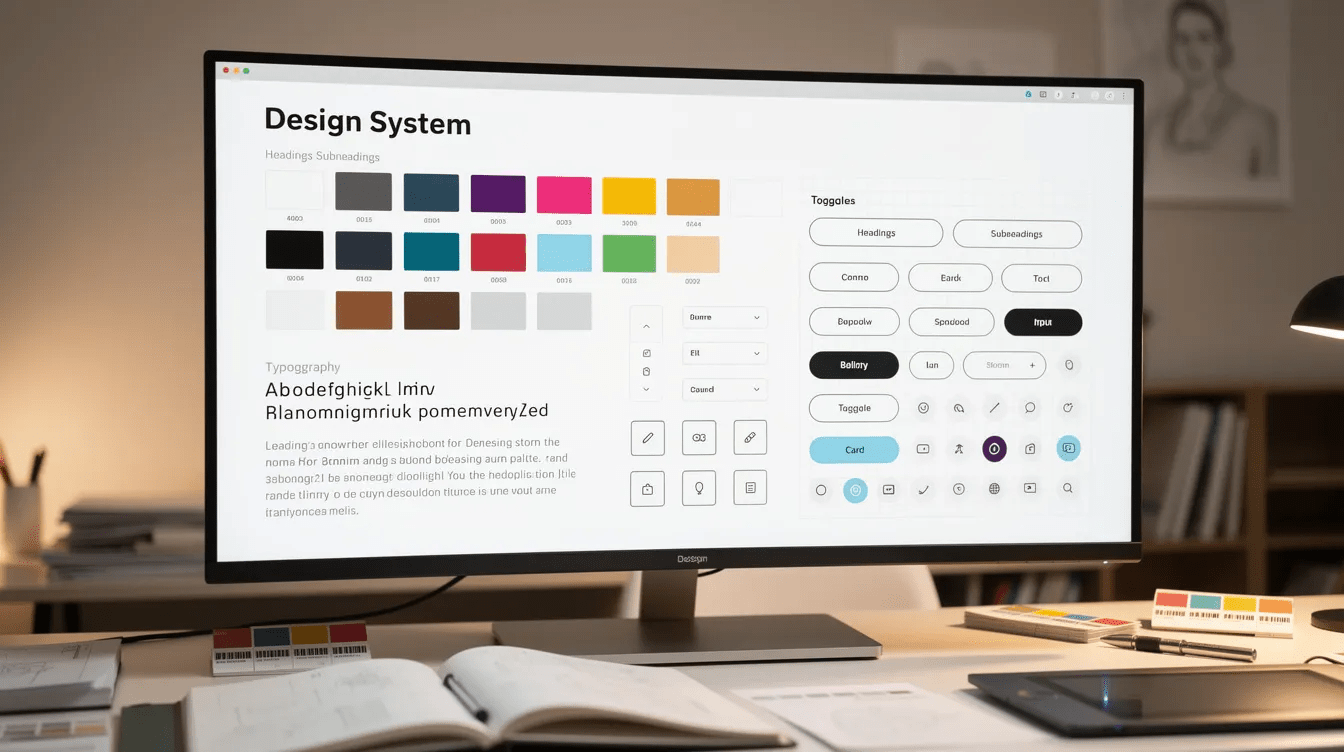
Elevato Digital runs brand discovery workshops that translate brand platforms into digital design systems-defining everything from color tokens to motion easing curves before a single pixel is placed.
Visual Language: From Logo to Layout
A logo is just the starting point. How it behaves across breakpoints-from a full horizontal lockup on desktop to a compact symbol on mobile-defines professional execution.
-
Set clear guidelines for logo usage, lockups, and responsive behavior. A logo that looks great at 1440px but breaks at 375px signals carelessness.
-
Grid systems and spacing create a cohesive look from homepage hero sections to blog article layouts. Emerging trends like Bento grids and asymmetric layouts are gaining traction in 2026.
-
Custom iconography and illustration differentiate design company websites from template-driven competitors. The trend toward hand-drawn, tactile textures is a direct counterbalance to AI-smooth visuals.
-
Performance-optimized web typography-using resources like Google Fonts with proper preloading, subsetting, and variable font files-avoids the flash-of-invisible-text problem.
-
Clean layouts improve readability and navigation. Set clear guidelines for hover states, buttons, focus rings, and interactive elements across every component.
Tone of Voice & Messaging on Agency Sites
How you write is as important as how you design. Copywriting style-formal, conversational, witty, technical-reflects agency culture and speaks directly to target audience expectations. Web content should be valuable and concise; every sentence should earn its place.
-
Key pages where brand voice must be strongest: homepage, “About,” services pages, case studies, and careers. These are the pages where prospects form opinions.
-
Transform generic headlines into specific ones. “We build beautiful websites” becomes “We design SaaS platforms that double demo requests in 60 days.” The latter communicates strategic thinking and measurable results.
-
Consistent tone supports trust, especially for design company websites that promise clarity and simplicity to clients. If the agency’s own site is confusing, why would a prospect trust them with theirs?
-
Elevato Digital aligns UX writing (button labels, form microcopy, error messages) and marketing copy with the same brand messaging framework, ensuring every touchpoint feels unified.
Information Architecture: Structuring a Design Company Website
Information architecture-your sitemap, navigation, and content taxonomy-is decisive for both user experience and SEO. Poor IA leads to high bounce rates and confused visitors. Strong IA supports internal linking, content hierarchy, and clean URL structures that search engines reward.
-
Must-have top-level pages for most agencies: Home, Work/Case Studies, Services, About, Insights/Blog, Contact. Websites must include essential foundational pages like contact and about pages as a baseline.
-
Small studios may use a simple nav; a larger digital agency with many verticals may need a mega-menu or grouped navigation. Simple menu structures enhance user experience on websites regardless of scale.
-
Internal linking strategies guide visitors from high-level pages into deep, conversion-focused content-blog posts link to related services, case studies link to industry verticals.
-
Elevato Digital uses IA workshops and card-sorting exercises with real users to validate navigation before design begins.
Homepage Layout: Designing a Clear, Conversion-Ready Front Door
Your homepage is the front door, the elevator pitch, and the first handshake rolled into one. Effective websites have intuitive navigation that lets visitors self-select their path within seconds.
-
Recommended section order: hero with outcome-focused value proposition → flagship projects → services overview → credibility signals → calls to action.
-
Hero headlines should focus on outcomes: “UX that increases your demo rate by 40%” or “We build SaaS websites that double conversion in 60 days.” Avoid vanity claims.
-
Displaying testimonials builds trust with website visitors. Use logos, short quotes, and awards-but avoid visual clutter. Whitespace and hierarchy matter more than volume.
-
Include quick paths based on visitor intent: “See our work,” “Talk to our team,” “Estimate your project.” Contact information should be easily accessible on a website at all times.
-
Elevato Digital tests different hero layouts, video versus static imagery, and button copy to improve homepage performance through ongoing optimization.
Services & Solutions Pages: From Capabilities to Clarity
Break services into clear categories: web design, web development, branding, digital marketing, and consulting. SEO strategies should include dedicated service pages and relevant keywords mapped to each offering.
-
Use scannable sections with outcomes-focused copy, not just lists of tools or deliverables. Structure content to aid search engine understanding with semantic headings and clear hierarchy.
-
Weave in relevant keywords like “custom web design,” “digital solutions,” and “digital experiences” naturally within the body copy and headings.
-
Include FAQs and process overviews (discovery → wireframe → design → build → launch → ongoing support) on key service pages to answer objections and increase time on page.
-
Elevato Digital’s service-page structure typically opens with a pain point, moves into solutions and outcomes, shows relevant case studies, and includes CTAs to download a guide or schedule a consultation.
Case Study Layouts: Showcasing Measurable Impact
A repeatable case study template keeps your portfolio consistent and credible:
-
Sections: client background → challenge → strategy → design and development execution → results → lessons learned.
-
Emphasize specific numbers-traffic percentage increases, conversion rate changes, revenue growth-instead of vague success claims. SEO optimization helps ensure website visibility on search engines, and case studies with real data prove you can deliver.
-
Use before/after visuals, annotated wireframes, and short video walkthroughs to deepen understanding of the design work.
-
Include quotes from client stakeholders (marketing directors, founders) as social proof: “The new site drove 2x qualified leads in the first quarter.”
-
Elevato Digital often aligns case studies with target industries-healthcare, manufacturing, SaaS, non-profit-so prospects see work relevant to their own challenges.
UX & Interaction Design for Design Company Websites
If your own site has clunky UX, prospects will assume your client work does too. Website design should prioritize user experience above all else. The data supports this: user experience design can increase conversion rates by 400%, a well-designed user experience can boost customer satisfaction by 80%, and companies with a strong user experience strategy outperform competitors by 200%.
-
Intuitive navigation, readable typography, and predictable interaction patterns are hallmarks of trust-building UX. Good UX design can reduce website bounce rates by 50%.
-
Micro-interactions, scroll effects, and subtle motion design make a site feel “designed” without harming performance-but motion must be purposeful, not gratuitous.
-
Accessibility basics-contrast ratios, keyboard navigation, alt text-are table stakes for any professional web design company. Responsive design improves user experience across 90% of devices.
-
Elevato Digital wireframes and prototypes key flows (like “request a quote” and “view portfolio”) before visual design begins, validating usability before aesthetics.

Performance, Speed, and Core Web Vitals
Fast-loading pages and strong Core Web Vitals scores are essential for both UX and SEO in 2026. Fast websites can improve both user satisfaction and search rankings simultaneously.
-
Practical tactics: image optimization with modern formats (WebP, AVIF), code splitting, tree-shaking, deferred non-critical JavaScript/CSS, server-side rendering, and aggressive caching.
-
Balance heavy visual elements (video, 3D, parallax) with performance budgets and lazy loading. A stunning hero video means nothing if LCP exceeds 4 seconds.
-
Target thresholds: LCP ≤ 2.5 seconds, INP ≤ 200 milliseconds, CLS ≤ 0.1 at the 75th percentile. Use Google Lighthouse and PageSpeed Insights as benchmarking tools.
-
Elevato Digital benchmarks existing sites before redesign and measures gains post-launch, setting performance budgets early and monitoring real user metrics continuously.
Responsiveness & Cross-Device Design
Designing mobile-first is non-negotiable, but don’t neglect large-screen experiences-especially in B2B contexts where decision-makers often browse on desktop.
-
Layout, navigation, and interactive modules should adapt across breakpoints: mobile (~320-480px), tablet (~768-1024px), laptop, and large monitors.
-
Test on real devices and modern browser stacks rather than relying solely on design tools. Real-device testing catches touch feedback issues, layout breaks, and performance gaps that emulators miss.
-
Elements that often break: complex grids, hover-only menus (which need touch equivalents), and image galleries that don’t scale. Each needs fallback designs or alternate interactions.
-
Elevato Digital includes responsive prototypes and QA passes across multiple device types as standard in every web dev build.
Integrating SEO & Digital Marketing into Design Company Websites
Design company websites should be built as performance platforms, not just portfolios. A strong SEO foundation elevates domain authority and visibility, driving organic leads month after month. SEO-friendly websites improve visibility and attract qualified leads-and websites optimized for SEO can see traffic increases of 14 times compared to those that ignore it.
-
Map target keywords (e.g., “design agency,” “digital agency in [city],” “custom web design services”) to specific pages so core templates can rank on the first page of Google using SEO strategies to appear prominently in search results. Every service, industry vertical, and location should have its own optimized page.
-
Incorporate SEO fundamentals: semantic headings, internal linking, structured data (schema.org for organization, service, breadcrumb), and clean URL structures, guided by on-page SEO best practices for improving search visibility.
-
Cross-channel integration with content creation, email marketing, social media marketing, and paid campaigns maximizes your digital presence across every touchpoint, especially when aligned with 最新SEO策略和趋势以提升网站可见性.
-
Elevato Digital includes an SEO and analytics plan in web design and development scopes from day one-treating search visibility as a design requirement, not an afterthought.
Content Strategy & Thought Leadership
Design companies should publish in-depth articles, trend reports, and case-study breakdowns. This isn’t optional; it’s how you build authority.
-
Recurring content themes: UX best practices, design systems, digital transformation stories, sector-specific insights (healthcare UX, hospitality design), and AI in design, plus niche examples such as digital marketing strategies for staffing agencies.
-
Consistent publishing supports organic traffic growth and positions the agency as a trusted advisor. Use real dates (2024–2026) and references to current trends to keep content timely.
-
Ongoing monitoring of website analytics is crucial for continuous improvement-track which content drives leads, not just pageviews, and understand how a专业SEO公司通过内容与技术优化提升网站流量与线索.
-
Elevato Digital often pairs content strategy with lead magnets (ebooks, checklists, templates) to capture qualified leads and build an email nurture pipeline.
Conversion Paths, Lead Capture & CRM Integration
Every page should guide the visitor toward a clear next step. Design clear conversion paths: “Book a discovery call,” “Get a proposal,” “Download the capabilities deck.”
-
Short, frictionless forms that collect just enough information (name, email, role, challenge) for meaningful follow-up. Avoid 10-field forms that kill lead generation.
-
Integrate with CRMs and marketing automation tools (HubSpot, Salesforce, Pipedrive) so inquiries never get lost between design and sales teams.
-
Include persistent CTAs in navigation and within long-form content without feeling pushy-a sticky header CTA or contextual inline link works well.
-
Elevato Digital typically sets up analytics funnels and event tracking to monitor lead quality, source attribution, and conversion optimization from the moment a new site launches.
Tech Stack & Development Choices for Agency Websites
The right tech stack depends on content volume, integrations, performance targets, and budget. Web design companies offer web and application development services that range from simple marketing sites to complex platforms-and the stack should match the ambition.
|
Platform |
Strengths |
Trade-offs |
|---|---|---|
|
WordPress |
Huge ecosystem, editorial control, mature plugins |
Plugin bloat, performance overhead |
|
Webflow |
Visual CMS, fast iteration, design-driven |
Customization limits at scale |
|
Jamstack (Next.js, Astro) |
Performance, scalability, modern DX |
Requires developer resources |
|
Headless CMS (Sanity, Contentful) |
Flexible, API-first, omnichannel |
Higher setup complexity |
|
Fully Custom |
Total control, optimal performance |
Highest cost and timeline |
|
Most web design projects fall below $10,000, but enterprise-level builds or complex platforms can exceed that significantly. Clean, maintainable code and security best practices (HTTPS, dependency management, regular backups) are non-negotiable for professional agencies. |
Elevato Digital evaluates each client’s needs-content volume, multilingual requirements, integrations-before recommending a platform. A Squarespace site might work for a three-page portfolio; a headless CMS with a React front-end makes more sense for a multi-region development company.
Integrations & Digital Solutions
Typical integrations on design company websites include analytics suites (Google Analytics, Mixpanel), chat tools (Intercom, Drift), scheduling apps (Calendly), proposal systems, and client portals.
-
Integrations should enhance the user experience, not clutter it. A chat widget that fires immediately on every page is a nuisance; one that appears when a user hesitates on the pricing page is helpful.
-
Support for digital marketing tools-SEO suites, A/B testing platforms (Optimizely, VWO), and newsletter services-demonstrates the agency’s ability to orchestrate complex digital solutions for clients, including specialized offerings like SEO services tailored for printing companies.
-
An agency’s own site is a showcase of its ability to wire together technology into a seamless experience. If the booking flow on your own site breaks, prospects won’t trust you with theirs.
-
Elevato Digital prototypes integration workflows (e.g., lead-to-CRM, scheduling-to-notification) before development begins to avoid surprises at launch.
Accessibility, Compliance & Trust Factors
Accessible design isn’t optional in 2026. Legal, ethical, and business reasons all point in the same direction: design company websites must be usable by everyone.
-
Critical accessibility practices: semantic HTML, ARIA labels, keyboard navigation, and testing with screen readers. Research shows median color contrast compliance among top domains sits around 62.7%, with only 20.4% fully compliant-there’s massive room for improvement.
-
Compliance standards like WCAG 2.1 AA are enforceable in the EU under the European Accessibility Act and expected under ADA/Section 508 requirements in the US. Non-compliance risks legal action and reputational damage.
-
Trust elements beyond accessibility: privacy policies, cookie management with proper consent flows, and visible security indicators. Security measures like SSL certification are vital for websites, and using HTTPS encryption is important for website security across every page.
-
Display up-to-date copyright notices, security badges where applicable, and clear terms of service.
-
Elevato Digital includes accessibility checks and remediation in both new builds and redesign projects, using a combination of automated tools and manual testing with assistive technology.
Global vs Local Positioning for Design Companies
Some agencies market as global partners; others emphasize specific cities or regions. Both approaches work-but the website must match the positioning.
-
Location pages and localized content support search visibility in key markets. A page titled “Web Design Agency in Denver” with local case studies and community references builds trust that a generic “Contact Us” page never will, similar to how real estate agents leverage local directories and SEO to increase visibility.
-
Tailor messaging and case studies to regional industries and business cultures. What resonates with enterprise brands in San Francisco is different from what works with consumer brands in Toronto.
-
Elevato Digital serves clients across North America but often showcases work in specific metro areas to build local trust while maintaining a broader digital strategy capability.
Multi-Language & Multi-Region Sites
When should a design company invest in multi-language support? When they’re actively serving or targeting clients across language boundaries-US, EU, and LATAM markets, for example.
-
Technical requirements: hreflang tags, localized URL structures (e.g., example.com/en/, example.com/es/), and translation workflows that blend human and machine translation.
-
Cultural adaptation goes beyond language: visuals, colors, case study relevance, and even humor must be localized for different markets.
-
A bilingual English/Spanish agency site launched in 2025 saw international leads from LATAM increase by 40% after implementing hreflang tags and localized case studies.
-
Elevato Digital advises on scalable multi-region architecture when planning large redesigns, ensuring performance and SEO considerations hold up across every locale.
Planning & Managing a Redesign of Your Design Company Website
A redesign isn’t a cosmetic refresh-it’s a strategic growth project. Here are the key stages, whether you’re an agency owner or a marketing lead overseeing the build. Align internal stakeholders on goals before selecting an agency or kicking off internal work.
-
Audit current site: analytics, speed, content inventory, SEO performance, user behavior data.
-
Clarify goals and KPIs: increase demo requests by 30%, reduce bounce rate by 20%, grow organic traffic by X%.
-
Update brand platform: visual identity, messaging, values.
-
Rebuild IA: navigation, content taxonomy, sitemap with clear milestones.
-
Design: wireframes, prototypes, mockups-validated with stakeholders.
-
Develop: build, integrations, performance optimization, content migration.
-
Migrate: 301 redirects, canonical tags, SEO preservation.
-
Launch: QA, user testing, analytics setup.
-
Optimize: monitor, iterate via A/B testing, and refine.
Realistic timelines: small agency site (5–10 pages): 8–12 weeks. Mid-size (15–30 pages, integrations): 12–20 weeks. Enterprise or multi-region: 20–30+ weeks. Common pitfalls include scope creep, content delays, untested integrations, and lack of stakeholder alignment.
Top agencies begin with extensive research and brand alignment before touching a pixel. Agencies with niche industry experience reduce onboarding time significantly. Elevato Digital offers both consulting and full execution for agencies whose current new site no longer reflects their capabilities.
Content Migration, Governance & Ongoing Updates
Moving legacy blogs, case studies, and landing pages without losing SEO value requires careful planning.
-
Map every existing URL to its new destination. Use 301 redirects for pages that change slugs. Remove underperforming content and consolidate where possible.
-
Establish content governance: who owns updates, approvals, and publishing cadence inside the agency. Without governance, a beautiful site grows stale within months.
-
Modular content blocks in modern CMS setups speed up future page creation-editors assemble pages from pre-built, brand-consistent components without developer involvement.
-
In a 2024–2025 migration, one mid-size agency consolidated 200+ legacy pages down to 80 high-quality pages, applied careful redirects, and saw preservation and slight improvement in search rankings within three months.
-
Elevato Digital often combines redesign projects with content cleanup and consolidation sprints, including metadata audits and redirect mapping as standard deliverables.
How to Choose the Right Digital Agency to Build or Redesign Your Site
Choosing a web design agency is one of the highest-leverage decisions a business can make. Here’s a practical checklist:
-
Relevant portfolio. Do they have design work in your industry or at your scale? Look for case studies with measurable results, not just visual polish.
-
Strategic thinking. Can they articulate why the IA is structured a certain way, or why certain interactions exist? Expert design is about decisions, not just deliverables.
-
UX depth. Do they perform user research, wireframing, and prototyping-or jump straight to mockups?
-
Technical capabilities. Performance, hosting, SEO, integrations, web development best practices.
-
Transparent process. Timeline, communication rhythms, feedback cycles, revision policies.
-
Cultural fit. Communication style, values, responsiveness. Web design agencies often provide ongoing support after launch-make sure you want to work with these people long-term.
Suggest reviewing case studies that show measurable outcomes-not just awards or visual polish. Position Elevato Digital as a strong option for organizations seeking a partner that blends web design, web development, and digital marketing into one engagement.
Questions to Ask Prospective Web & Design Partners
Before signing a contract, ask these questions:
-
How do you validate UX decisions? (User testing, prototyping, analytics?)
-
How will you measure ROI for our website redesign? Which metrics, how often?
-
Who will be on our core team-designer, developer, project manager? Can we meet them?
-
What is your process for performance optimization and SEO integration?
-
How do you handle content migration and redirects to preserve SEO?
-
What platforms or tech stacks do you recommend and why?
-
What post-launch ongoing support do you offer (updates, bug fixes, analytics)?
-
Can you show me two or three recent projects similar in size, industry, or complexity?
-
How do you handle accessibility compliance-WCAG testing, remediation, auditing?
-
What is your approach to motion design, ui ux design, and their impact on performance?
Red flags to watch for: vague timelines, no analytics planning, no documented design process, overemphasis on aesthetics over function, inability to show real numbers in case studies, no mention of accessibility.
Elevato Digital typically answers these questions with transparency-presenting past projects with metrics, sharing team bios, providing proposals that include performance and SEO plans, and emphasizing long-term partnership over one-off builds.
Future Trends in Design Company Websites (2026–2028)
The next two to three years will reshape what’s expected from agency websites:
-
AI-assisted design and content creation. Generative tools will accelerate layout exploration, copy drafting, and motion prototyping-but human curation remains vital for authenticity and brand integrity. Award winning designers will be defined by how well they guide AI, not whether they use it.
-
Personalization and server-side adaptation. Hero copy, featured case studies, and navigation will adapt based on visitor location, referring source, and intent-powered by first-party data, not third-party cookies.
-
3D, WebGL, and spatial web elements. Immersive 3D models, interactive scenes, and depth layering will become more common-but with awareness of performance costs. Creative solutions must balance ambition with real-world constraints like dark mode support and device capability.
-
The convergence of marketing and product. B2B and SaaS companies are merging their marketing sites with product UIs-shared design systems, embedded demos, hybrid experiences.
-
Privacy, ethical design, and machine-readability. Rising expectations around first-party data handling, transparent UI patterns (no dark patterns), and structuring content so AI agents can parse and cite it. Digital strategy will increasingly include governance around data ethics.
Agencies like Elevato Digital will increasingly advise clients not just on design excellence and execution but on broader digital strategy, creative direction, and governance frameworks that keep sites performing for years.

Conclusion: Turning Your Website into Your Strongest Design Asset
A design company’s website is its primary proof of expertise. Every principle covered in this article-from brand strategy and visual storytelling to ui design, ux design, graphic design, responsive web design, and conversion optimization-contributes to a site that doesn’t just look great but drives engagement, builds credibility, and generates qualified leads. Great design is measurable.
Audit your current site against the benchmarks above: Is your brand identity consistent and distinctive? Does your UX deliver on the promise you make to clients? Are your pages fast, accessible, and structured for SEO? Are your case studies backed by real numbers? If the answer to any of these is “not really,” it’s time to treat your next redesign as a strategic growth project-not a cosmetic refresh.
Whether you’re building a new site from scratch, redesigning an outdated one, or looking for a digital agency partner who can handle everything from art direction to web dev to digital marketing, Elevato Digital is built for exactly this kind of engagement. Reach out to explore how their team can turn your website into your strongest business asset.